
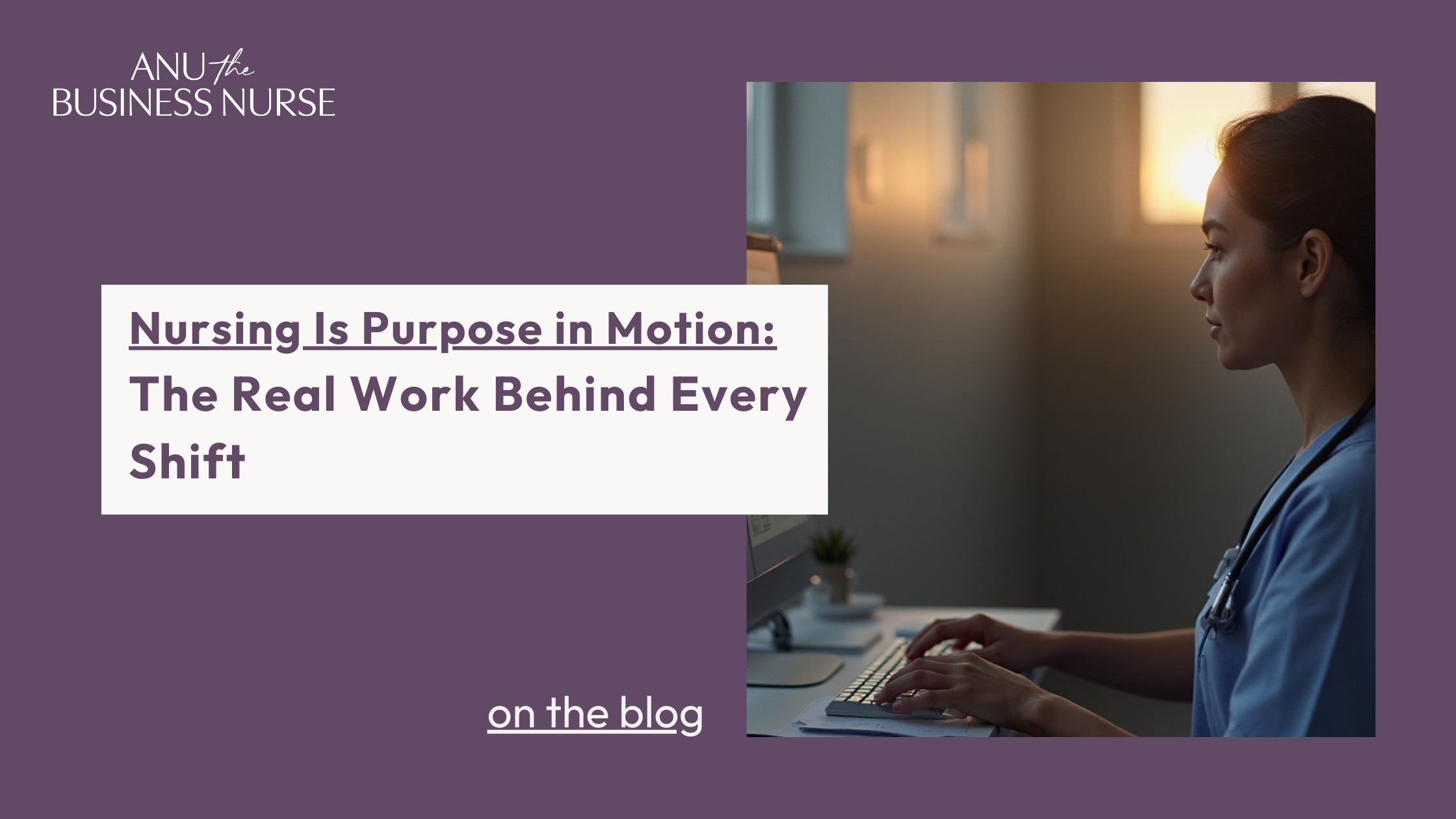
Behind every chart, every medication pass, and every shift report, there is something deeper at work.
There is nursing purpose.
Nursing is not simply a profession. It is purpose in motion. It is a skill applied with intention. It is compassion delivered under pressure. And it is an impact created in moments that often go unseen.
This is a tribute to the real work behind every shift, the work that defines professional identity, fuels nurse motivation, and drives meaningful nursing impact.
The Invisible Work Patients Never See
Patients often see the visible parts of nursing:
Vital signs being taken.
Medications administered.
Discharge instructions reviewed.
What they rarely see is the invisible labor happening simultaneously.
The nurse who double-checks a medication dosage because something feels slightly off.
The nurse who anticipates a complication before it becomes critical.
The nurse who notices subtle changes in behavior that signal deterioration.
This unseen vigilance protects patients in ways that rarely make headlines.
Behind every “stable” patient is a nurse who stayed alert.
Behind every smooth discharge is a nurse who coordinated details across teams.
This invisible work is where much of nursing impact lives. It is the quiet expertise that prevents crises before they unfold.
Skill and Compassion: Why Both Matter
There is a misconception that nursing is either technical or emotional.
In reality, it is both.
Nurses use clinical reasoning, pharmacological knowledge, assessment skills, and evidence-based decision-making every single shift. At the same time, they provide reassurance, clarity, and steady presence during vulnerable moments.
Skill without compassion can feel cold.
Compassion without skill can feel unsafe.
The power of nursing purpose lies in the integration of both.
A nurse who calmly explains a complex diagnosis to a frightened family member is practicing advanced communication skills. A nurse who prioritizes interventions during rapid patient decline is demonstrating clinical leadership in real time.
This combination is what makes nursing a profession grounded in science and humanity.
The Micro-Moments That Change Outcomes
Much of nursing impact happens in micro-moments.
It is the extra assessment that catches early sepsis.
It is the additional question that reveals unmanaged pain.
It is the pause before discharge that uncovers confusion about medication instructions.
These moments may appear small, but they often change the trajectory of care.
A slight adjustment in positioning can prevent a pressure injury.
A timely call to a provider can prevent a code.
A clear explanation can prevent a readmission.
These are not dramatic interventions. They are consistent, thoughtful actions rooted in professional awareness.
This is why nurse motivation often comes from knowing that what seems small may actually be life-altering.
The Emotional Labor and the Importance of Boundaries
Nursing is not only physically demanding. It is emotionally complex.
Nurses absorb fear, frustration, grief, and uncertainty, sometimes all within the same hour. They remain steady when families are overwhelmed. They provide comfort when outcomes are uncertain.
This emotional labor is part of nursing purpose. But it must be managed intentionally.
Compassion does not require self-sacrifice to the point of depletion.
Healthy boundaries are not a sign of disengagement. They are a sign of professional sustainability.
Protecting your energy does not reduce your nursing impact. It ensures you can continue to show up fully in your role.
Why Recognition Matters for Retention and Care Quality
When nursing work goes unnoticed, burnout accelerates.
Recognition is not about praise alone. It is about visibility and validation.
Healthcare systems that acknowledge nursing impact experience:
Higher retention rates
Stronger team morale
Improved patient safety outcomes
When nurses feel valued, they are more engaged. When they are engaged, patient care improves.
Nursing gratitude should not be performative. It should be reflected in staffing decisions, leadership development opportunities, professional growth support, and safe working environments.
Investing in nurses is investing in quality care.
Practical Ways Nurses Can Protect Their Energy
Sustaining nurse motivation requires intentional practices.
Here are realistic strategies nurses can use to protect their energy while continuing to deliver high-quality care:
1. Separate Identity From Productivity
Your worth is not defined by how many tasks you completed. Nursing purpose is not measured only in output.
2. Develop a Post-Shift Reset Ritual
This could be a walk, journaling, deep breathing, or simply changing clothes before engaging with home life. Create a psychological transition.
3. Advocate Early, Not After Exhaustion
If workload feels unsafe or unsustainable, speak up before burnout becomes severe.
4. Protect Professional Growth
Engage in continuing education, mentorship, or skill development that aligns with your long-term goals. Growth fuels motivation.
5. Practice Realistic Self-Compassion
Not every shift will feel perfect. Not every outcome will be ideal. Being human does not negate your professionalism.
These strategies support longevity without romanticizing overwork.
Honoring Nurses Without Romanticizing Burnout
It is important to celebrate nursing purpose without glorifying exhaustion.
Nursing is meaningful. It is impactful. It changes lives.
But it should not require constant depletion.
Honoring nurses means advocating for systems that support safe staffing, professional development, and psychological well-being.
It means recognizing that resilience is valuable, but sustainable systems matter more.
Behind every shift is heart.
Behind every chart is responsibility.
Behind every nurse is a professional who deserves respect, support, and growth.
Nursing is purpose in motion. And that purpose deserves protection.
Final Reflection
Behind every shift is heart. Behind every chart is responsibility. Behind every nurse is a professional carrying immense skill, purpose, and impact.
Nursing is purpose in motion. And that purpose deserves protection, support, and strategic growth.
If you’re ready to move beyond burnout and step into a more empowered, aligned nursing career, you don’t have to navigate it alone.
Visit Anu The Business Nurse to explore services designed to help you reclaim your work-life balance and professional clarity or book a call directly.
Let’s build a nursing career that supports both your purpose and your peace.
