
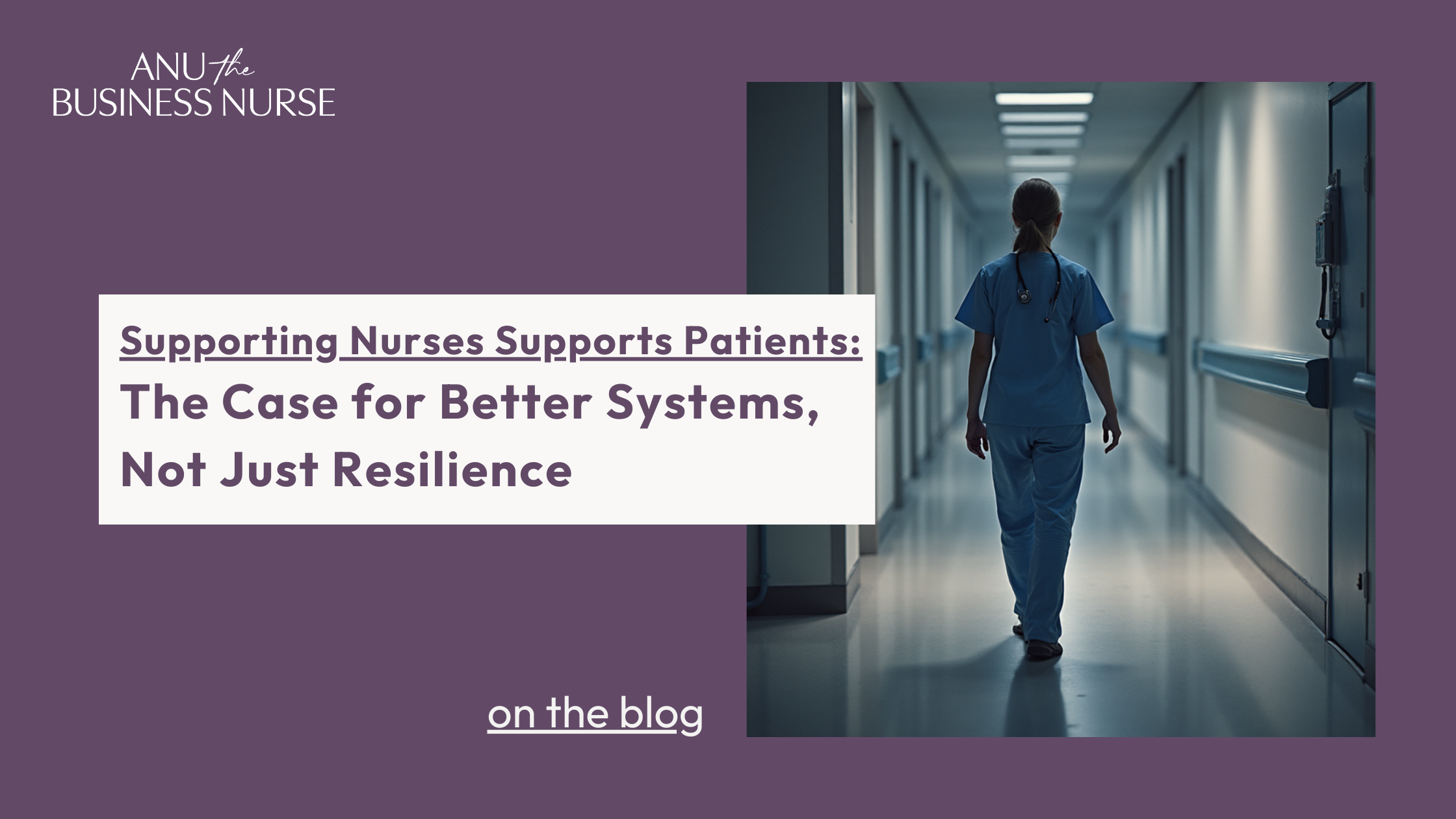
Healthcare often praises resilience.
Nurses are told they are strong. Adaptable. Selfless. Tireless.
But resilience is not a staffing model.
It is not a workflow solution.
And it is not a substitute for system support.
If we want better patient outcomes, we must move beyond asking nurses to simply “be resilient.” We must design environments that actively support nurses.
Because when you support nurses, you support patients.
The Myth of “Just Be Resilient”
Resilience is a valuable trait. It allows nurses to remain steady in unpredictable, high-pressure situations.
But resilience becomes problematic when it is used as a solution to structural issues.
Heavy workloads.
Unsafe staffing ratios.
Documentation overload.
Inconsistent leadership communication.
These are system-level challenges.
No amount of individual resilience can compensate for chronic understaffing or inefficient workflows.
When burnout becomes widespread, it is not a personal failure. It is a signal.
Nurse burnout prevention requires structural change, not just motivational messaging.
How Nurse Support Impacts Patient Outcomes
There is a direct relationship between nurse support and patient safety.
Research consistently shows that:
Lower nurse-to-patient ratios reduce mortality rates
Supportive work environments decrease medical errors
Engaged nurses improve patient satisfaction
Higher retention strengthens care continuity
Quality care staffing is not just a workforce issue. It is a patient safety strategy.
When nurses are overextended, cognitive overload increases. Decision fatigue sets in. The margin for error narrows.
When nurses are supported, they have the capacity to:
Think critically
Communicate clearly
Anticipate complications
Provide thorough patient education
Supporting nurses improves outcomes at every level of care.
What Real Support Looks Like
Support is more than appreciation days or social media recognition.
Real support is structural, measurable, and operational.
1. Safe and Sustainable Staffing
Quality care staffing means aligning nurse-to-patient ratios with acuity, not just census numbers.
It means recognizing that a high-acuity unit requires more resources, even if patient numbers appear stable.
Adequate staffing reduces burnout and protects patient safety simultaneously.
2. Training and Professional Development
Nurse retention strategies must include growth pathways.
When nurses feel stuck without opportunities to expand skills or explore leadership roles, disengagement increases.
Professional development can include:
Clinical specialization
Leadership training
Informatics exposure
Consulting pathways
Supporting growth fuels motivation and long-term retention.
3. Smarter Use of Informatics
Technology should reduce burden, not increase it.
Efficient electronic health records, predictive analytics, and streamlined documentation systems help reduce cognitive overload.
Informatics support allows nurses to focus on patient care rather than administrative inefficiencies.
When systems are designed with nursing workflow in mind, productivity improves without sacrificing safety.
4. Psychological Safety
Psychological safety is foundational.
Nurses must feel comfortable raising concerns, questioning unclear orders, and reporting near misses without fear of retaliation.
Organizations that cultivate psychological safety see stronger teamwork and fewer adverse events.
Support nurses by creating environments where their voices matter.
Recognition That Is Meaningful, Not Performative
Recognition is important. But it must go beyond symbolic gestures.
Meaningful recognition includes:
Involving nurses in decision-making processes
Listening to frontline insights during policy changes
Addressing workload concerns transparently
Providing fair compensation and advancement opportunities
When recognition aligns with action, trust builds.
Performative appreciation without structural change erodes morale.
Action Steps for Leaders and Organizations
If healthcare leaders want to support nurses effectively, the following steps create measurable impact:
Conduct Real Staffing Reviews
Evaluate ratios based on acuity and cognitive workload, not just budget constraints.
Streamline Documentation
Engage bedside nurses in workflow improvement conversations.
Invest in Leadership Development
Prepare nurses for roles beyond bedside burnout cycles.
Establish Clear Communication Channels
Ensure transparency during organizational changes.
Measure Burnout Indicators
Track turnover trends, engagement surveys, and workload metrics proactively.
Supporting nurses is not an expense. It is an investment.
Investing in Nurses Is Investing in Care
Nurses are the largest segment of the healthcare workforce.
They are present at the bedside, in clinics, in community health, and across care transitions.
When nurses are supported, patients are safer.
When nurses are retained, continuity improves.
When nurses feel valued, engagement rises.
Nurse retention strategies, nurse burnout prevention initiatives, and quality care staffing models all contribute to a stronger healthcare system.
This is not about comfort. It is about outcomes.
Final Thoughts
Healthcare does not improve by asking nurses to endure more.
It improves when systems are designed to support them.
If you are a nurse navigating burnout or questioning your next step, know that your exhaustion is not a weakness. It is feedback.
And if you are ready to take control of your career and move beyond survival mode, support is available.
Visit Anu The Business Nurse to explore services designed to help you break free from the burnout cycle and build a sustainable nursing path or book your initial consultation today.
Because investing in nurses is investing in care. And you deserve both professional growth and personal balance.
